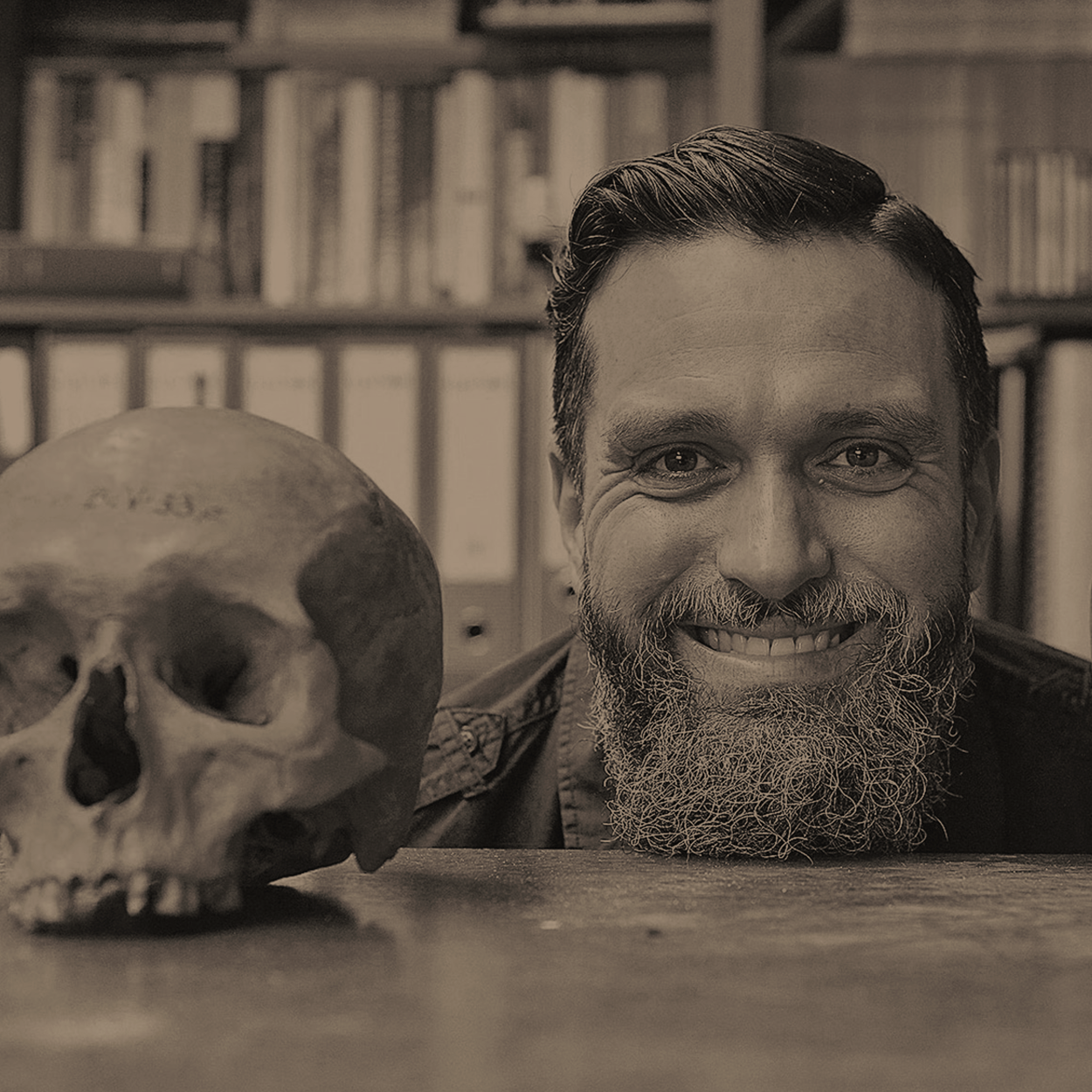
Dr Mario Novak
Mario Novak got a degree in history and archeology at the Faculty of Arts and Humanities,
University of Zagreb, where he received his doctorate in biological anthropology
(bioarchaeology) in 2008. Between 2002 and 2013 he worked at the Croatian Academy of
Sciences and Arts, and from 2013 to 2015 he worked at University College Dublin, Ireland as a
postdoctoral researcher. Since 2015, he has been employed at the Institute for Anthropological
Research in Zagreb, where he currently works as a senior research associate. Since 2024 he has a
post of an associate professor at the University of Primorska, Koper, Slovenia.
His professional activities involve a holistic approach in the research of human remains from an
archaeological context. In his research, he combines numerous analytical methods taken from
various scientific disciplines such as (bio)archaeology, stable isotope analysis, paleogenetics,
radiology, etc. He is the PI and collaborator in several domestic and international research
projects. In addition to publications in scientific and professional journals, he also presented the
results of his research at more than 80 meetings, but also at numerous public lectures, workshops
for children, etc.
Mario as external collaborator on the MOVE project will explore with us diet and mobility of
Neolithic communities in the western part of South Carpathian Basin.
LAMPEA
The Mediterranean Laboratory of Prehistory Europe Africa , LAMPEA - UMR 7269, is hosted at the Mediterranean House of Human Sciences – MMSH in Aix-en-Provence, France. It has agreements with the CNRS , Aix-Marseille University (AMU), and the Ministry of Culture (MC), and has also had an agreement with Inrap.
LAMPEA as one of France's leading laboratories for prehistory is characterized by its broad multidisciplinary research, which brings together geologists, prehistorians, paleontologists, and anthropologists. They are studying various natural and cultural issues, and analyzing the organization, transformations, and evolution of past human societies. One of the unit's unique features at the national level is its development of research questions that reconstruct past diets and migrations using isotopic analysis. Equipped with several resource centers (library, osteotheque, lithotheque) and technical platforms (biochemistry, microscopy, PlaSedO) that serve as hubs for all the research projects.
MOVE project has successful collaboration with LAMPEA’s dr Gwenaëlle Goude and Guy Andre who provided scientific and technical expertise and transfer of knowledge in the field of stable isotope analysis.
CEREGE- Research and teaching center for environmental geosciences
CEREGE is an international multidisciplinary research and teaching center, which covers environmental geosciences, from paleoclimatology, geochemistry to physical chemistry. It is also a center of excellence in terms of human skills and instrumental capabilities. CEREGE has state-of-the-art laboratories and a multiple areas of expertise, combining field observation techniques with analytical experimentation and numerical modelling.
MOVE project has close collaboration with Helene Mariot, Abel Guihou and Pierre Deschamps.
Hebrew University of Jerusalem, Israel
The Hebrew University of Jerusalem is Israel’s top university and research institution, ranked among the world’s 100 leading universities. It was founded more than 100 years ago, and the university’s first Board of Governors included exceptional intellectuals such as Albert Einstein and Sigmund Freud. Since its beginning, this university has consistently remained at the top of groundbreaking research across numerous disciplines, among which is archaeology.
Move project has close collaboration with its LAB - Laboratory for Archaeo-Bioanthropology and Dr. Camille de Becdelièvre, Archaeo-Anthropologist
and senior Lecturer at this University